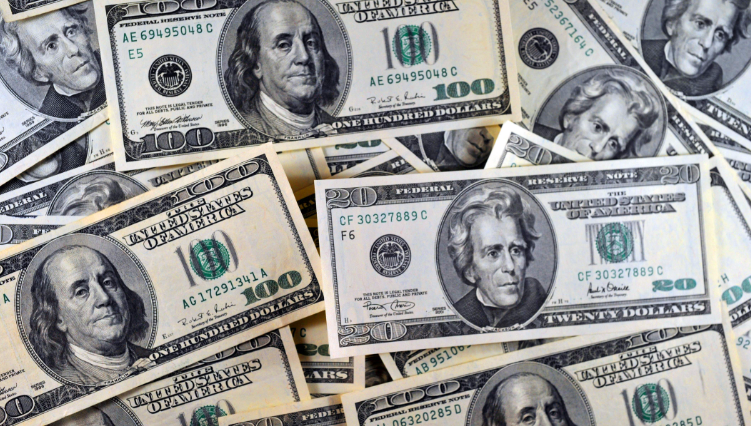
The US dollar has been the undisputed heavyweight champion of the currency world for a while now. If you've been watching the DXY (US Dollar Index), trading forex, or just paying attention to international news, you've felt its strength. But that feeling is starting to mix with a nagging question: how much longer can this last? Everyone from hedge fund managers to small import businesses is asking it. The truth is, there's no simple calendar date. The dollar's endurance isn't about time; it's about a fragile balance of economic forces. Some are propping it up, and others are waiting for a chance to pull the rug out. Let's cut through the noise and look at what's actually holding the dollar up, what's threatening it, and what that means for the road ahead.
What You'll Find in This Guide
The Three Pillars Propping Up the Dollar
To understand how long dollar strength can last, you first need to see what's holding it up. It's not magic; it's three concrete, interlocking factors.
The Fed's "Higher for Longer" Stance
This is the big one. While other major central banks like the European Central Bank (ECB) have started cutting rates, the Federal Reserve has been painfully slow to pivot. I remember chatting with a colleague in late 2023 who was convinced a March 2024 cut was a lock. It wasn't. The Fed's priority remains taming inflation, even if it means keeping rates restrictive. This interest rate differential makes holding US dollars attractive. Why park your money in euros yielding 3% when you can get 5%+ in US Treasuries? This drives capital flows into dollar-denominated assets, boosting demand for the currency. As long as the Fed's messaging stays hawkish relative to its peers, this pillar stands firm. You can follow their official statements and meeting minutes on the Federal Reserve website.
Relative Economic Resilience
The US economy, frankly, has been more stubborn than many expected. Yes, there's talk of a slowdown, but compare the US growth projections to those of the Eurozone or Japan. The US often comes out looking like the least bad option. Strong consumer spending (though it's showing some fatigue) and a resilient labor market support this view. When global investors get nervous about a worldwide recession, they often flock to the economy perceived as the safest bet. That's been the US. This "cleanest dirty shirt" phenomenon is a powerful short-to-medium-term driver of dollar strength.
Its Safe-Haven Status During Geopolitical Stress
This is almost reflexive. When headlines scream about war in Ukraine, conflict in the Middle East, or tensions in Asia, the dollar and US Treasuries get a bid. It's the world's go-to panic button. In 2022, after Russia invaded Ukraine, the DXY soared. This isn't about interest rates or growth; it's about deep-seated trust in US financial markets and institutions as a place to preserve capital during turmoil. As long as the world is unstable, this pillar provides a floor for the dollar. You can't quantify geopolitical risk easily, but you can't ignore it either.
Key Takeaway: The dollar's current strength isn't a single story. It's a combination of attractive yields, better-than-expected economic data, and its role as the global financial system's panic room. Knock out one of these, and the whole structure gets shakier.
The Cracks in the Dollar's Foundation
Now, the other side of the coin. These are the factors that, if they grow, will steadily erode the dollar's dominance. They're why I'm skeptical of calls for a forever-strong dollar.
The most immediate threat is the eventual Fed pivot. It's not a matter of "if" but "when" and "how fast." The market is constantly trying to price this in. When credible data shows US inflation is sustainably trending toward the 2% target, the Fed will signal cuts. The moment that signal becomes clear, the interest rate advantage that's propping up the dollar starts to evaporate. Money will look for the next high-yield opportunity elsewhere.
Then there's the US twin deficits – the budget deficit and the current account deficit. The US government spends more than it takes in, and the country imports more than it exports. To fund this, the US needs a constant inflow of foreign capital. For years, this hasn't been a problem because the world was happy to lend to the US. But if confidence wanes, or if foreign central banks (like China's) decide to diversify their reserves away from dollars, this dynamic could shift. It's a long-term structural weight, not an immediate crisis, but it's always in the background.
Finally, the elephant in the room: de-dollarization chatter. Is it overblown? Mostly, yes. The dollar's share of global reserves is declining slowly, but from a very high base. The real action isn't in central banks ditching dollars overnight; it's in bilateral trade agreements between countries like China and Russia or India and the UAE settling trade in their own currencies. This chips away at the margins. It won't topple the dollar this year or next, but it creates an environment where alternatives slowly become more viable, reducing the dollar's exclusive dominance over decades.
| Factor Supporting Dollar | Factor Weakening Dollar | Likely Timeline of Impact |
|---|---|---|
| High Fed Interest Rates | Fed Rate Cut Cycle | Next 6-12 months |
| US Economic Outperformance | \nGlobal Economic Rebalancing | 12-18 months |
| Geopolitical Safe-Haven Flows | Reduction in Global Crises | Unpredictable (event-driven) |
| Liquidity & Network Effects | Gradual De-dollarization | Multi-year trend |
Putting It Together: A Realistic Scenario Outlook
So, how long can the dollar's strength last? I see it playing out in phases, not with a single flip of a switch.
In the next 3-6 months, I expect the dollar to hold most of its ground, but with increased volatility. The Fed is still on hold, data will be mixed, and geopolitical sparks could fly at any moment. This isn't a environment for a smooth, sustained dollar decline. You'll see rallies and sell-offs, but the DXY likely trades in a elevated range. Think of it as a boxer leaning on the ropes—defensive, but not knocked down.
The 6-12 month window is where the real transition happens. This is when the first Fed cut will likely materialize, barring an inflation surprise. This is the catalyst the market is waiting for. The initial dollar sell-off on the "first cut" news might be sharp, but the more important trend will be the pace of subsequent cuts. If the US economy cools noticeably and the Fed cuts faster than the ECB or others, the dollar could enter a more sustained weakening phase. This is the period where the pillars start to visibly crack.
Beyond a year, it gets foggier, but the path of least resistance points toward a moderately weaker dollar from today's levels. Not a collapse, but a normalization. The extreme interest rate advantage will be gone. If the rest of the world's economies start to find their footing, the US won't look like the only game in town. The safe-haven bids will still happen during crises, but they might be shorter-lived. The long-term structural pressures from the deficits and de-dollarization will continue their slow grind.
I've been through cycles like this before. In 2008, the dollar surged on a flight to safety, then slumped as the Fed launched QE. In 2020, the same pattern. The mistake many make is thinking the peak is the new normal. It rarely is.
What This Means for Your Trading and Business Decisions
This isn't just academic. Your wallet is on the line.
For Forex Traders: The easy money betting on a straight-line dollar rally is probably over. The strategy shifts to range-trading or looking for selective weakness against currencies where the central bank story is even more dovish. Pairs like USD/JPY are highly sensitive to yield differentials, so watch the Fed-BOJ dynamic like a hawk. Consider using options to hedge against volatility spikes from unexpected data or geopolitics.
For International Businesses: If you're a US exporter, the hope is that a slightly weaker dollar down the road makes your goods more competitive. If you're an importer or a company with costs in foreign currencies, the recent strength has been a relief, but don't bank on it forever. Now is the time to review your hedging strategies. Locking in favorable rates for the next 6-12 months might be a prudent move, rather than gambling on continued strength.
For Investors: A weakening dollar typically benefits US multinationals who earn revenue overseas (as foreign profits translate back into more dollars). It also tends to be a tailwind for commodities priced in dollars, like oil and gold, and for emerging market assets, which become cheaper for foreign investors. Rebalancing a portfolio to account for a less dominant dollar is a sensible multi-year theme.
Your Dollar Strength Questions Answered
If the Fed signals just one or two cuts instead of many, could the dollar rally again?
Absolutely. The market has a habit of overestimating the speed and scale of Fed easing. If inflation proves stickier and the Fed only delivers a couple of "insurance" cuts while other central banks are cutting aggressively, the dollar's yield advantage could actually widen again. This is a key risk to the weakening dollar narrative. I'd watch core PCE inflation data more than the headlines.
Is the Euro a credible challenger to the dollar if the US weakens?
In the short to medium term, it's the main alternative by default, but it's a flawed one. The Eurozone has its own structural problems—fragmented fiscal policy, slower growth, and political tensions between member states. A dollar downturn might lift the euro, but it's unlikely to see the kind of sustained, multi-year bull run that would signify true reserve currency rivalry. The euro is more of a temporary beneficiary than a permanent successor.
How should a small business owner with international suppliers plan for the next year?
Don't try to outguess the market. Your job is to manage risk, not speculate. Sit down with your banker or a treasury specialist and look at forward contracts. You can lock in an exchange rate for future payments today. If the current rate works for your profit margins, securing it for a portion of your expected needs removes a huge variable. It's an insurance premium, not a bet on direction. I've seen too many businesses get burned waiting for a better rate that never came.
Could a major geopolitical event completely derail this outlook?
Without a doubt. A significant escalation in a major region or a true global banking scare would trigger a violent flight to safety. In that scenario, all the talk about Fed cuts and deficits goes out the window in the short term, and the dollar would spike. The key is recognizing that these spikes are usually sharp and temporary. They create trading opportunities but don't change the underlying economic fundamentals for long. Plan for the probable (a gradual shift), but have a contingency for the possible (a crisis-driven surge).
The dollar's strength has had a good run, supported by a unique confluence of events. But markets are mean-reverting machines. The conditions that created this strength are already evolving. The Fed will cut, growth will rebalance, and the world will slowly, fitfully, explore alternatives. This doesn't mean a dollar crash is around the corner. It means the era of unilateral, effortless dollar appreciation is likely concluding. We're moving into a phase of more balanced, volatile, and contested currency markets. Understanding that shift is more valuable than searching for a specific expiration date on the dollar's reign.